Engr. Professor Basir Adewale Ikotun
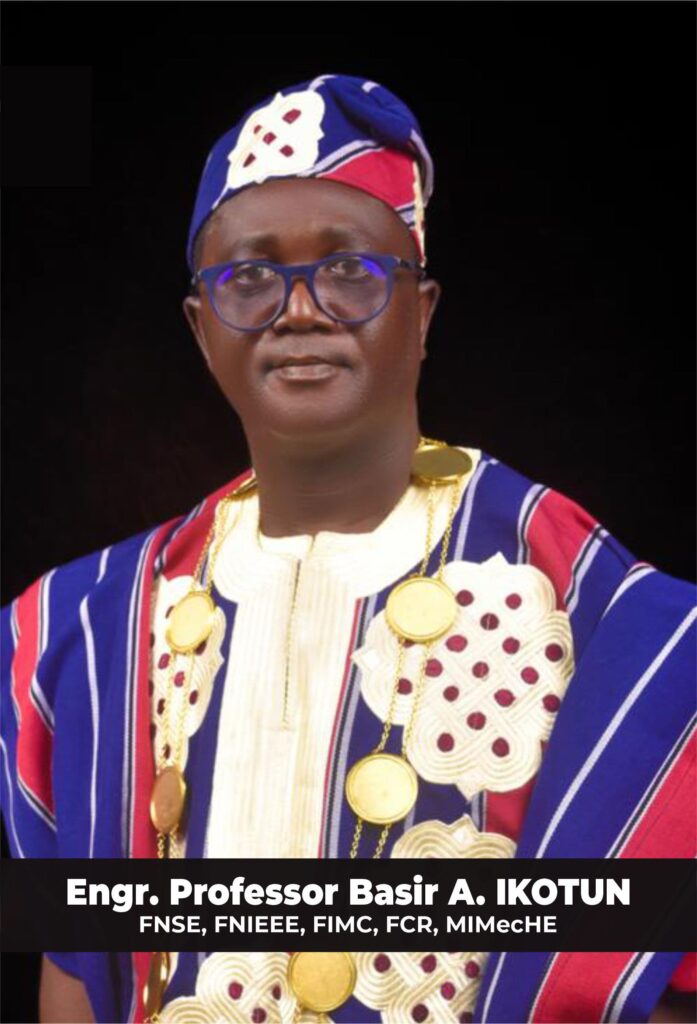
Professor Engr. Adewale Basir Ikotun, FNSE, FIMC, FCP, FNIEEE NIMec hE — Professor of Automation and Mechatronics Systems
Career and Leadership Journey
Strategic Engineering Executive & Academic with 25+ years of international experience in remanufacturing, industrial automation, Robotic and mechatronics. A proven leader in both manufacturing operations and technical education, transitioning from senior maintenance management in the UK and Nigeria to founding a premier engineering academy. Expertise in driving sustainable engineering skills development and leading complex electro mechanical systems.
Since the founding of Automation and Engineering Academy (AEA) Nigeria Ltd in 2012, Professor Ikotun has moved beyond traditional maintenance into the sophisticated domain of Remanufacturing. While maintenance seeks to fix what is broken, Professor Ikotun’s methodology focuses on restoring used products to “as-new” condition with matching warranties.
Evidence of Longevity: For over 10 years, his academy has served as a hub for lifecycle extension. By 2014, he was already implementing modules that moved away from “replace-and-discard” culture, instead focusing on the refurbishment of high-value industrial controllers and electrical machines that were otherwise headed for landfills.
The Didactic Connection: His design of didactic (teaching) equipment—specifically for Nigerian tertiary institutions—relies heavily on the remanufacturing of existing components to create high-functioning mechatronics trainers, proving a long-standing commitment to the circular economy.
Strategic Partnerships with Chinese Manufacturers
Professor Ikotun has bridged the gap between Nigerian industrial needs and Chinese manufacturing prowess. His collaboration with several prominent Chinese firms has focused on Technology Transfer and the adaptation of hardware for the African environment.
Collaborative Reverse Engineering: Working with Chinese partners, Professor Ikotun has utilized reverse engineering to deconstruct complex imported machinery. This process involves:
Geometric Modeling: Using 3D scanning to replicate unavailable spare parts.
Material Analysis: Identifying local material substitutes that can withstand the Nigerian climate/power fluctuations while maintaining Chinese performance standards.
Implementation of RE Workflows: He has successfully integrated Chinese-made PLCs (Programmable Logic Controllers) and HMI (Human Machine Interface) systems into older production lines. By reverse engineering the original communication protocols, he has enabled “cross-platform” industrial communication, significantly reducing costs for local factories.
Intelligent Traffic Systems (ITS): The deployment of intelligent traffic lights in Lagos and Abuja was made possible through the reverse engineering of existing traffic controller logic and the integration of customized Chinese-manufactured sensor arrays, adapted for local “centralized control” architecture.
Energy Transition (LPG/CNG): His current work in vehicle conversions involves reverse engineering fuel injection systems to allow for seamless bi-fuel operation—a process perfected through years of technical exchange with Asian manufacturing hubs specializing in alternative fuel hardware.
The Microsoft CMT service was used for managing the peer-reviewing process for this conference. This service was provided for free by Microsoft and they bore all expenses, including costs for Azure cloud services as well as for software development and support.